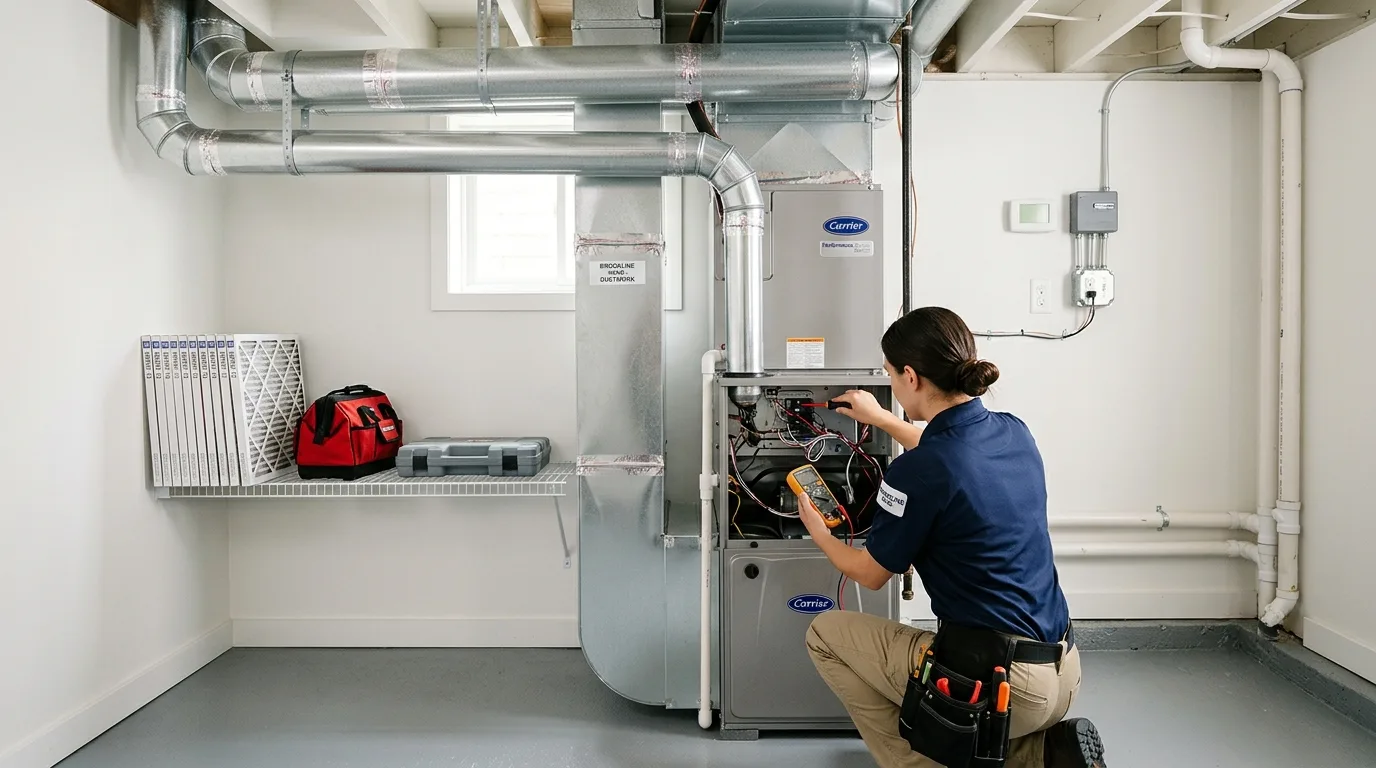
Brookline HVAC Repair: Common Problems & Troubleshooting Tips
When your HVAC system acts up, identifying the problem quickly can save you discomfort and money. Common HVAC issues in Brookline homes often stem from challenges like aging infrastructure, causing problems such as frozen coils, compressor failures, or a furnace not working. While some simple troubleshooting can help, understanding these problems is crucial for knowing when to call a professional. As an HVAC technician with 15 years in the field, I can tell you that prompt attention prevents minor issues from becoming major repairs, especially given the unique demands of our local homes.
Key Takeaways
- Older Brookline homes often have undersized ductwork, leading to AC issues like frozen coils and compressor failures.
- Electrical issues from older wiring commonly contribute to HVAC malfunctions in the area.
- Brookline's humidity and temperature swings frequently stress older HVAC systems, increasing breakdown frequency.
- Common furnace problems include thermostat issues, ignition failure, dirty burners, and safety lockouts.
- Most HVAC installations, replacements, and substantial modifications legally require a mechanical permit (780 CMR).
- All technicians handling refrigerants must hold EPA Section 608 certification.
Recognizing Common HVAC Problems in Your Home
Your HVAC system often gives you clues when something is wrong. Paying attention to these signs can help you address issues before they escalate. Common signs of HVAC issues in homes here include reduced airflow. You might notice that not enough air is coming out of your vents, impacting overall comfort. Temperature variations are another clear sign. Some rooms might be too hot while others are too cold, indicating inconsistent temperature distribution throughout your property.
Unusual sounds from the air handler or outdoor unit are significant warning signals. Grinding, banging, or squealing noises often indicate mechanical problems within the system. A furnace not working at all, or cycling on and off frequently, known as short cycling, also points to an underlying malfunction. These are crucial indicators that your system is struggling and needs attention. Recognizing early signs of HVAC system failure, such as uneven heating or cooling, unusual noises, or increased energy costs, is crucial for preventing more costly problems and ensuring home comfort.
Brookline's housing stock, often featuring older homes, presents unique challenges. In my experience, older homes in this area frequently have undersized ductwork. This causes AC systems to work harder, which can lead to common problems like frozen coils, compressor failures, and elevated energy bills. Due to the area's humidity and significant temperature swings, older HVAC systems are frequently stressed and more prone to repeated failures. Additionally, electrical issues are common in homes with older wiring not designed to support modern AC loads, often contributing to HVAC malfunctions. These specific factors necessitate tailored solutions and experienced professionals.
Troubleshooting Common Furnace Issues
Furnaces are complex, but many common problems have clear indicators. Understanding these can help you decide when to seek professional help. One frequent culprit is thermostat miscommunication. Your thermostat acts as the brain of your heating system, sending signals to turn on and off. If it's faulty or not properly calibrated, it might not send the correct signals. This results in no heat or inconsistent temperatures, leaving your home uncomfortable. Always check your thermostat's settings and batteries first.
Ignition or flame-sensing issues are also prevalent problems. Modern furnaces use electronic igniters or pilot lights to start combustion. If the igniter is failing, or the flame sensor is dirty, the furnace may fail to light. This often causes the system to try multiple times before locking out for safety. Dirty burners are another common culprit. Over time, burners can accumulate soot and debris. This obstructs the flame, preventing efficient combustion, and reduces heating efficiency. Restricted airflow can also severely impact furnace performance. When air cannot pass freely through filters or vents, the furnace overheats or struggles to distribute warm air.
Finally, safety lockouts are common and important mechanisms. Furnaces are equipped with safety features that shut down the unit if a problem is detected. This prevents dangerous conditions like overheating or carbon monoxide buildup. While a lockout indicates a problem, it also protects your home and family. Resetting it might work once, but if it keeps happening, professional diagnosis is essential. Homeowners often ask me about these lockouts, and I always emphasize calling a technician to properly diagnose the root cause, rather than just resetting it repeatedly. This ensures proper system function and prevents potential hazards from lingering, securing your family's safety.
The Role of Professionals, Permits, and Maintenance
Many HVAC issues can be prevented or delayed with regular, annual maintenance. This proactive approach is crucial for extending system lifespan and ensuring peak efficiency. A yearly tune-up helps ensure all components are clean, calibrated, and operating correctly. This reduces wear and tear and maintains energy efficiency. It also allows technicians to catch small problems before they become major breakdowns, saving you money in the long run. Poor indoor air quality can be a persistent, subtle problem in homes here. This often signals underlying HVAC issues that require professional diagnosis, which regular maintenance can help uncover.
When professional help is needed, it's important to know about technician qualifications and local regulations. Permits are legally required for most HVAC work in the Town of Brookline. This includes installations, replacements, and substantial modifications. This ensures compliance with local building codes and the Massachusetts State Building Code (780 CMR). These permits ensure your system is installed safely and to code. However, routine HVAC maintenance, such as filter replacement, thermostat swaps, and minor repairs that do not alter the system's configuration or capacity, are generally exempt from permit requirements. This means simple fixes usually don't need formal approval.
Regarding technician qualifications, Massachusetts does not have a state-level general HVAC contractor license. However, specialized licenses are required for specific HVAC work. For example, a state Refrigeration Technician License is required for professionals installing, repairing, replacing, or maintaining any refrigerant-containing part of refrigeration/air conditioning systems of 10 tons or greater capacity. This is defined by Mass.gov. Furthermore, all HVAC technicians who maintain, service, repair, or dispose of equipment that could release refrigerants into the atmosphere must hold EPA Section 608 certification. These requirements ensure environmental and safety standards are met, protecting both your home and the environment. Always ensure your contractor holds the correct, valid licenses and certifications for the work being performed. Additionally, in Brookline's dense residential neighborhoods, the placement of outdoor AC condensers requires careful consideration of noise regulations and setback requirements, which an experienced contractor will understand.
Warning: Ignoring HVAC issues or attempting complex repairs without proper training and tools can be dangerous and costly. Faulty repairs can lead to gas leaks, electrical fires, or further damage to your system. Some problems, like a cracked heat exchanger in a furnace, can even pose a carbon monoxide poisoning risk. Always consult a licensed HVAC professional for any issue beyond simple troubleshooting like changing a filter or checking your thermostat batteries. Your safety and the longevity of your system depend on it. Improperly executed work can also void manufacturer warranties and lead to expensive code violations.
Pro tip: Regularly inspect and replace your HVAC system's air filter, typically every 1-3 months depending on usage and home conditions. A clean filter is the simplest, most effective way to prevent reduced airflow and dirty coils. This helps maintain efficiency, extends your system's lifespan, and improves your indoor air quality. It's a small task that yields big benefits for your home's comfort and your energy bills, especially with Brookline's older homes that might already have airflow challenges.
Understanding common HVAC problems and knowing when to troubleshoot or call a professional is key to maintaining a comfortable and safe home. Regular maintenance, coupled with prompt attention to issues, will ensure your heating and cooling systems operate efficiently for years to come.
Is your HVAC system acting up, or do you need a professional tune-up? Contact WinFix Home Services for reliable HVAC repair and trusted service. Visit WinFix.com/#ask to schedule a consultation with a licensed HVAC technician.