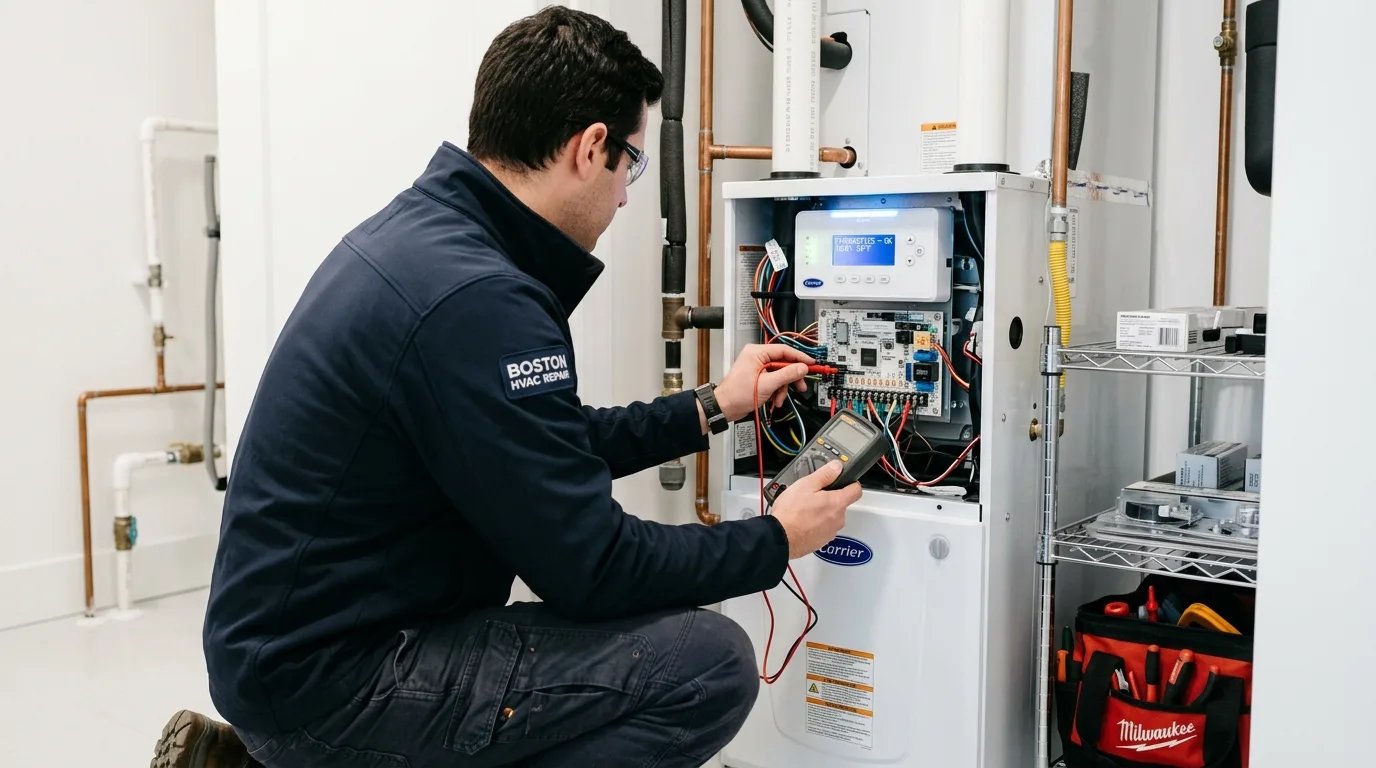
Boston HVAC Repair: Common Problems & Troubleshooting Tips
When your HVAC system acts up, identifying the problem quickly can save you discomfort and money. Common signs of HVAC issues for the area homeowners include strange noises, uneven temperatures, or the system failing to turn on. While some simple troubleshooting can help, understanding these problems is crucial for knowing when to call a professional. As an HVAC technician with 15 years in the field, I can tell you that prompt attention prevents minor issues from becoming major repairs.
Key Takeaways
- Common HVAC issues include strange noises, uneven heating/cooling, or system failure.
- Furnace problems often involve thermostat issues, ignition failure, or dirty burners.
- Reduced airflow from clogged filters or blocked vents is a prevalent AC issue.
- Harsh New England weather places significant stress on HVAC systems, requiring diligent maintenance.
- Regular HVAC maintenance is crucial for extending system life and preventing common issues.
- Technicians handling refrigerants must be EPA Section 608 certified and may need a state Refrigeration Technician License.
Recognizing Common HVAC Problems
Your HVAC system often gives you clues when something is wrong. Paying attention to these signs can help you address issues before they escalate. Common signs of HVAC issues for homeowners include grinding, banging, or squealing sounds. These noises often indicate mechanical problems within the system, such as a failing motor bearing or a loose belt.
Another prevalent issue is uneven heating or cooling in different rooms. This can mean your system is struggling to distribute air properly. It might also point to issues with ductwork or zone control. The system failing to turn on at all is a clear sign of a malfunction. Similarly, cycling on and off frequently, known as short cycling, indicates an underlying problem. This could be anything from an undersized unit to a clogged filter or a faulty thermostat. The harsh New England weather, with its cold winters and humid summers, places significant stress on HVAC systems. This stress can lead to more frequent repairs compared to milder climates, making vigilance essential for your home.
Troubleshooting Common Furnace Issues
Furnaces are complex, but many common problems have clear indicators. Understanding these can help you decide when to seek professional help. Common furnace problems often include thermostat miscommunication. Your thermostat acts as the brain of your heating system. If it's faulty or not properly calibrated, it might not send the correct signals. This results in no heat or inconsistent temperatures, leaving your home uncomfortable.
Ignition or flame-sensing issues are also frequent. Modern furnaces use electronic igniters or pilot lights to start combustion. If the igniter is failing, or the flame sensor is dirty, the furnace may fail to light. This often causes the system to try multiple times before locking out for safety. Dirty burners are another common culprit. Over time, burners can accumulate soot and debris. This obstructs the flame and reduces heating efficiency. Restricted airflow, frequently caused by clogged filters or blocked vents, can also severely impact furnace performance. When air cannot pass freely, the furnace overheats or struggles to distribute warm air.
Finally, safety lockouts are common and important. Furnaces are equipped with safety features that shut down the unit if a problem is detected. This prevents dangerous conditions. While a lockout indicates a problem, it also protects your home and family. Resetting it might work once, but if it keeps happening, professional diagnosis is essential. Homeowners often ask me about these lockouts, and I always emphasize calling a technician to properly diagnose the root cause, rather than just resetting it repeatedly. This ensures proper system function and prevents potential hazards from lingering.
Addressing Common Air Conditioning Problems
Air conditioning systems face their own set of common problems, especially during humid summers. Identifying these can help maintain your home's cooling efficiency. Reduced airflow is a prevalent air conditioning issue that homeowners may encounter. This is frequently caused by clogged filters or blocked vents. When filters are dirty, air cannot pass through easily, forcing the system to work harder. Blocked vents restrict cool air from reaching your rooms effectively.
Dirty evaporator or condenser coils also significantly reduce system efficiency and increase workload. The evaporator coil, located indoors, absorbs heat from your home's air. The condenser coil, outdoors, releases that heat. When either coil is covered in dirt or grime, heat transfer is severely hampered. This forces your AC unit to run longer and consume more energy to achieve the desired temperature. This increased workload puts extra stress on the compressor and other vital components. This leads to higher energy bills and potential premature system failure. These issues are exacerbated by the humid summers that place significant stress on AC systems, making them work harder to remove both heat and moisture from the air. Regular cleaning of coils and prompt filter changes are crucial preventative steps.
The Role of Maintenance and Professional Expertise
Many HVAC problems can be prevented or mitigated with proactive measures. Regular HVAC maintenance is crucial for extending the life of a system and preventing many common issues faced by homeowners. A yearly tune-up helps ensure all components are clean, calibrated, and operating correctly. This reduces wear and tear and maintains energy efficiency. It also allows technicians to catch small problems before they become major breakdowns, saving you money in the long run.
When professional help is needed, it's important to know about technician qualifications. Massachusetts does not license general HVAC technicians. However, specific certifications are critical for certain types of work. Professionals who handle refrigerants must be EPA Section 608 certified. This ensures they can properly manage chemicals that could release into the atmosphere. For larger systems, typically 10 tons or greater, technicians may also require a Massachusetts state Refrigeration Technician License. This demonstrates a higher level of specialized expertise for complex cooling systems.
HVAC installations and repairs in the area must also comply with various codes and standards. This includes state health codes and ASHRAE standards for Indoor Air Quality. This ensures your system not only heats or cools but also promotes a healthy indoor environment. The City has also adopted the Massachusetts Stretch Energy Code. This sets enhanced energy efficiency requirements affecting HVAC system specifications and performance. All work must also meet EPA requirements for refrigerant management. These regulations ensure installations are safe, efficient, and environmentally responsible, protecting both your home and the community.
Warning: Ignoring HVAC issues or attempting complex repairs without proper training and tools can be dangerous and costly. Faulty repairs can lead to gas leaks, electrical fires, or further damage to your system. Some problems, like a cracked heat exchanger in a furnace, can even pose a carbon monoxide poisoning risk. Always consult a licensed HVAC professional for any issue beyond simple troubleshooting like changing a filter or checking your thermostat batteries. Your safety and the longevity of your system depend on it.
Pro tip: Regularly inspect and replace your HVAC system's air filter, typically every 1-3 months depending on usage and home conditions. A clean filter is the simplest, most effective way to prevent reduced airflow and dirty coils. This helps maintain efficiency, extends your system's lifespan, and improves your indoor air quality. It's a small task that yields big benefits for your home's comfort and your energy bills.
Understanding common HVAC problems and knowing when to troubleshoot or call a professional is key to maintaining a comfortable and safe home in the area. Regular maintenance, coupled with prompt attention to issues, will ensure your heating and cooling systems operate efficiently for years to come.
Is your HVAC system acting up, or do you need a professional tune-up? Contact WinFix Home Services for reliable HVAC repair and trusted service. Visit WinFix.com/#ask to schedule a consultation with a licensed HVAC technician.
Related Boston Homeowner Guides: