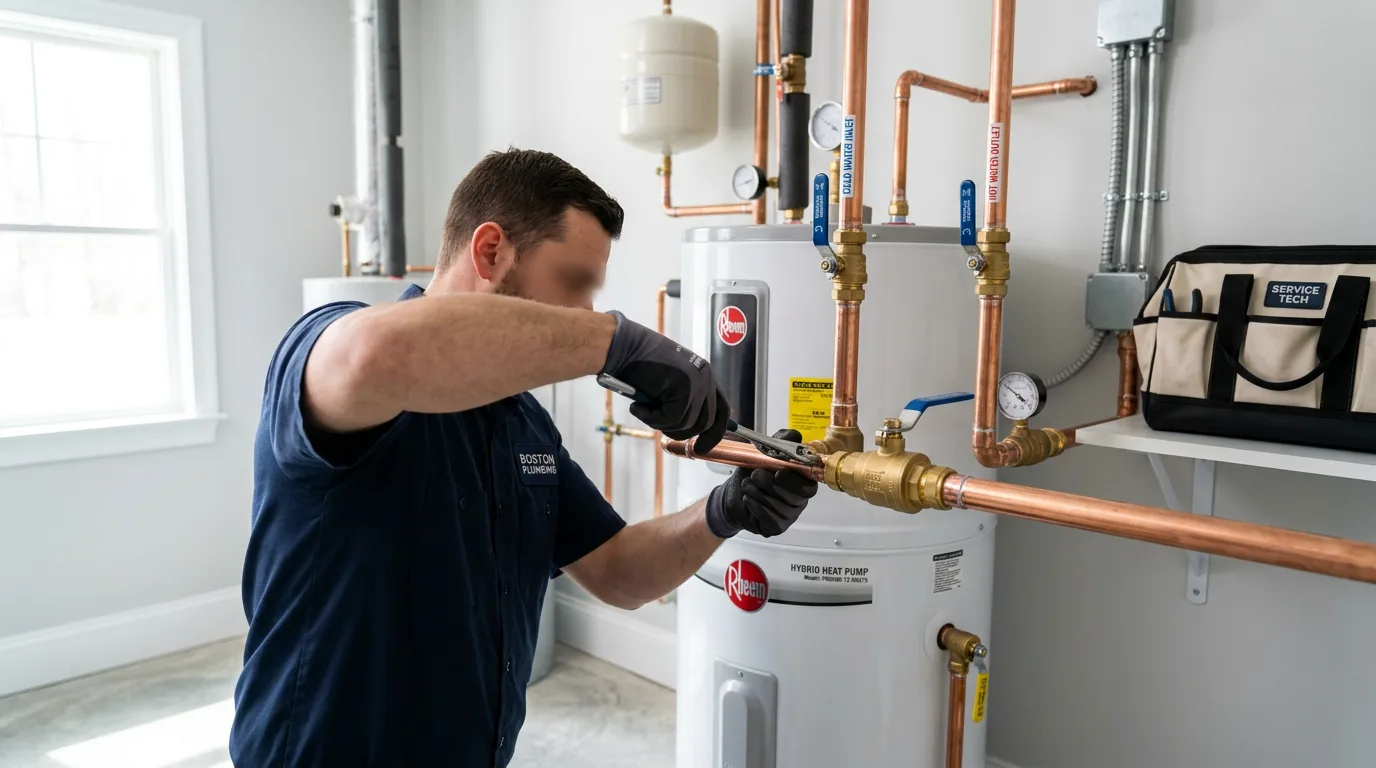
Boston Water Heater Replacement Cost: 2026 Price Guide
For homeowners in Boston, replacing a water heater typically ranges from approximately $1,900 to $2,500 for a standard 50-gallon electric unit, and $1,900 to $2,800 for a standard 50-gallon gas unit. These costs are generally influenced by the unit type, local labor rates, permitting rules, size, and additional installation requirements. As a master plumber with 18 years in the field, I can tell you that understanding these factors is crucial for budgeting and ensuring your new installation is safe and compliant.
Key Takeaways
- Standard 50-gallon electric water heater replacement costs range from $1,900-$2,500.
- Standard 50-gallon gas water heater replacement costs range from $1,900-$2,800.
- Costs are influenced by unit type, labor rates, permits, size, and installation complexity.
- A Plumbing Permit is required for all water heater installations or replacements.
- Only a licensed plumber/gas fitter can obtain permits and perform the work.
- Mass Save offers rebates and incentives for energy-efficient water heater upgrades.
Factors Influencing Your Water Heater Replacement Cost
The total cost to replace your water heater isn't just the price of the unit itself. Many variables contribute to the final bill. Water heater replacement costs are generally influenced by factors such as the unit type (standard tank vs. tankless), size, local labor rates, permitting rules, and additional installation requirements. Each of these components adds to the complexity and expense of the project.
For a standard 50-gallon electric unit, homeowners can expect costs to range from approximately $1,900 to $2,500. If you're looking at a standard 50-gallon gas unit, the cost typically ranges from $1,900 to $2,800. These figures include the unit, labor for removal and installation, and standard materials. The average cost to replace a standard tank water heater can range from $600 to $3,100, while installing an energy-efficient tankless water heater might cost between $1,400 and $5,600. The choice between a traditional tank or a tankless model is a major cost driver due to differences in unit price and installation complexity.
Installation complexity plays a big role. If your existing setup requires significant modifications to electrical lines, gas piping, or venting, that will add to the cost. For example, upgrading from a tank to a tankless system often involves more extensive plumbing and gas line adjustments. The size of the unit, whether it's 40, 50, or 80 gallons, also affects the material cost. Local labor rates reflect the cost of living and specialized skills in the area, contributing significantly to the overall expense. These rates ensure that qualified professionals are compensated fairly for their expertise.
Permits and Professionals: Non-Negotiable Requirements
One of the most crucial aspects of water heater replacement that directly impacts cost, and often gets overlooked, is permitting and professional installation. Installation or replacement of a water heater or boiler requires a Plumbing Permit. This is not optional; it's a legal requirement designed to protect your home and ensure safety. This permit ensures that all work adheres to established codes.
Massachusetts General Law requires a licensed plumber/gas fitter to obtain all necessary permits and perform all plumbing/gas work. This includes water heater replacements. This means that, as a homeowner in Massachusetts, you are generally not allowed to secure plumbing or gas permits themselves. These permits must be obtained by the respective licensed contractor. This law ensures only qualified professionals handle these critical installations, reducing risks.
A licensed professional understands the Massachusetts Uniform State Plumbing Code, 248 CMR 10.00. This code governs the requirements for all plumbing installations, including water heaters. They ensure your installation is safe and compliant. Owners in Massachusetts who do not use registered contractors or fail to obtain necessary permits for plumbing work cannot receive payment from the Massachusetts guaranty fund if issues arise. This leaves you vulnerable to costly repairs if something goes wrong with unpermitted work, making professional installation a sound investment.
The Inspection Process and Maximizing Savings
Getting a permit is only the first step; ensuring the work is inspected and approved is equally vital. After plumbing work related to water heater replacement under a permit is completed, an inspection must be scheduled through the Inspectional Services call center. An inspector will verify that the installation adheres to the approved permit and all state codes. This is your assurance of a safe and legally compliant system, providing long-term peace of mind.
While the permit and professional installation add to the upfront cost, there are ways to offset expenses and save money long-term. The Mass Save program in Massachusetts offers rebates and incentives. These can help reduce the overall costs of upgrading or installing a water heater for eligible residents. In my experience, these programs can significantly impact your final cost, especially for high-efficiency models, making them more accessible to homeowners.
Always discuss potential rebates with your licensed plumber. They can help you identify qualifying energy-efficient units. They can also assist with the application process for these programs. Choosing a newer, more efficient model may have a higher initial cost. However, the long-term energy savings and potential rebates often make it a wise financial decision, paying dividends over the lifespan of the unit. This makes the replacement a smart investment for your home and wallet.
Warning: Never attempt to install or replace a water heater yourself, or hire an unlicensed individual, to cut costs or bypass permits. This is a severe risk in Massachusetts. Unpermitted work is illegal and dangerous, potentially leading to gas leaks, electrocution, scalding, or severe water damage. You will also face substantial fines, be forced to redo the work, and void your homeowner's insurance. Furthermore, without a registered contractor and proper permits, you forfeit protection from the Massachusetts guaranty fund, leaving you entirely responsible for any issues.
Pro tip: When getting quotes for water heater replacement, ask for a detailed breakdown that includes the unit cost, labor, permit fees, and any necessary upgrades (like electrical or gas line modifications). Also, always inquire specifically about eligibility for Mass Save rebates or other local incentives. This comprehensive approach ensures you have a clear picture of all costs and potential savings, helping you budget accurately and make an informed decision.
Replacing your water heater is a significant home improvement. Understanding the costs involved, the necessity of permits, and the benefits of professional installation is key. By following these guidelines, you ensure a safe, efficient, and legally compliant hot water system for your home.
Is your water heater due for replacement, and you need a transparent quote from a licensed professional? Contact WinFix Home Services for reliable service you can trust. Visit WinFix.com/#ask to schedule a consultation with a licensed plumber.
Related Boston Homeowner Guides: