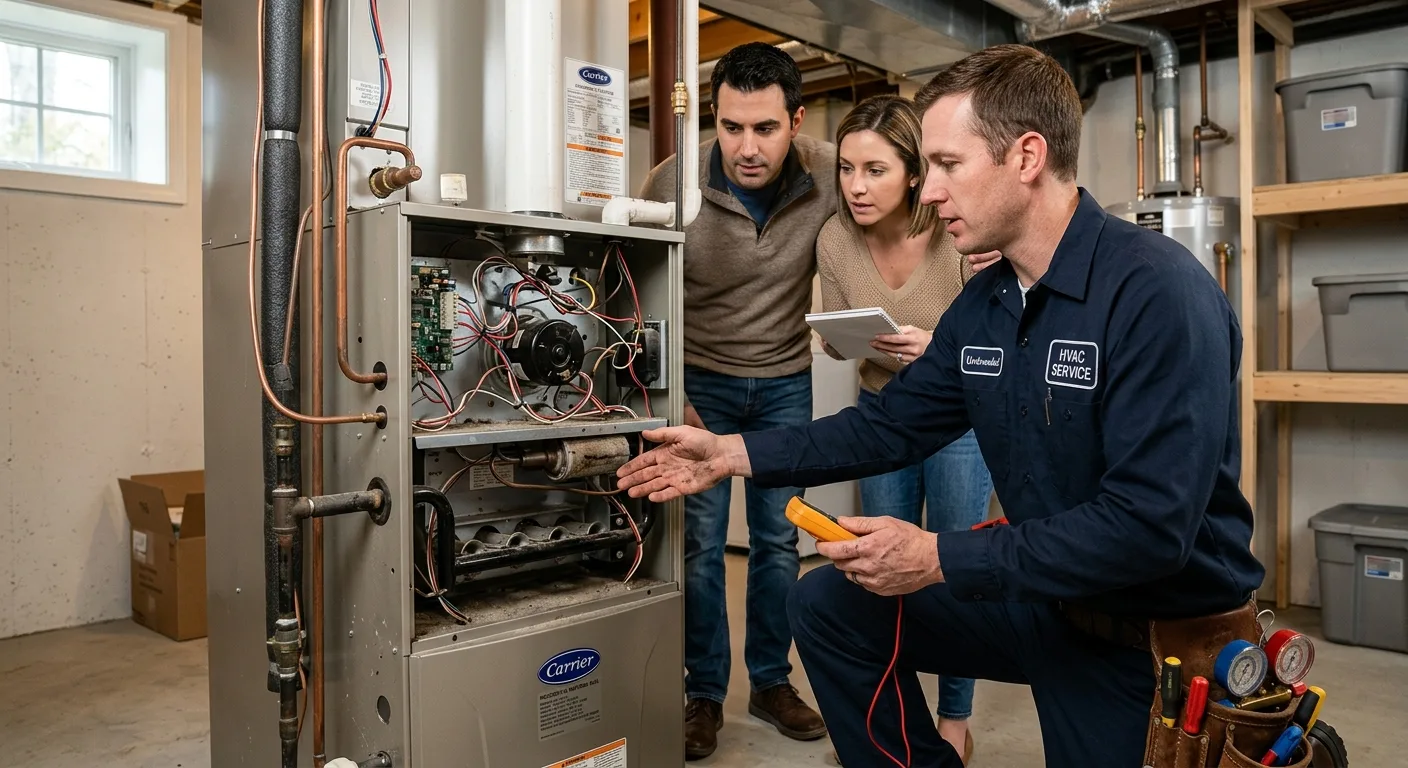
Brookline HVAC: Repair Your System or Replace It?
Deciding between HVAC repair and replacement is a major decision for any homeowner. For most homeowners in Brookline, replacing an older, inefficient, or frequently failing unit is almost always the more reliable and cost-effective long-term solution. As an HVAC technician with 15 years in the field, I understand that the upfront cost of a new system can be daunting, but ignoring critical warning signs or pouring money into an aging unit often leads to greater expense and frustration down the road.
Key Takeaways
- A professional assessment from a qualified contractor is essential for an informed repair vs. replacement decision.
- Key factors include the HVAC unit's age (systems over 15 years are less efficient), accumulated repair costs, and potential energy savings from new models.
- Permits are legally required for HVAC replacements, new installations, and substantial modifications in this area.
- All HVAC technicians who handle refrigerants must hold EPA Section 608 certification.
- Regular preventative maintenance extends system lifespan, helps reduce energy bills, and can delay costly replacements.
Factors Influencing Your Repair vs. Replace Decision
When your HVAC system starts acting up, it’s rarely a simple fix. Most homeowners cannot independently determine if they need an HVAC repair or a full system replacement. This makes a professional assessment from a qualified contractor absolutely crucial for an informed decision. Several key factors weigh heavily on this important choice, each with financial and comfort implications for your home.
One of the primary considerations is the HVAC unit's age. Like any mechanical system, furnaces, boilers, and air conditioners have a lifespan. HVAC units typically last over 15 years, but as they age, they become less efficient and more prone to breakdowns. An older system will struggle to maintain consistent temperatures. It will also consume more energy, leading to higher utility bills. If your unit is frequently breaking down, requiring multiple repairs each year, it's a strong indicator that replacement might be more economical than continuing to patch up an aging system. The accumulated cost of repairs can quickly approach or even exceed the investment in a new unit.
The cost of the repair versus a new system is another critical factor. A minor repair, like replacing a faulty thermostat or cleaning a clogged drain line, is usually inexpensive and extends the life of a relatively new unit. However, if the repair involves a major component like the compressor in an AC unit or the heat exchanger in a furnace, the cost can be substantial. Sometimes, a single major repair can be 30-50% of the cost of a brand-new system. At that point, investing in a new, more efficient unit makes more financial sense. This offers a fresh warranty and improved performance. I've seen this dozens of times; what seems like a costly repair is actually a down payment on a replacement.
Finally, consider the unit's current energy efficiency. Older HVAC systems, even when working, are typically far less efficient than modern, energy-star-rated models. Newer HVAC models are generally more energy efficient. This makes replacement an attractive option if an older system is causing high energy bills and frequent repairs. Upgrading to a new system can lead to significant energy savings, ranging from 20-40%. This improved efficiency not only benefits your wallet but also reduces your home's environmental footprint. A reputable HVAC contractor will provide a realistic overview of the problem, potential solutions, and the advantages and disadvantages of each option. They will help you weigh the upfront cost against long-term savings and reliability.
The Role of Professionals, Permits, and Licensing
Regardless of whether you repair or replace your HVAC system, working with qualified professionals and adhering to Massachusetts' permit and licensing requirements is non-negotiable. Permits are legally required for HVAC replacements, new installations, and substantial modifications in this area. This ensures compliance with local building codes and the Massachusetts State Building Code (780 CMR). These permits act as a critical safeguard. They verify that work meets established safety and construction standards, protecting your property and family.
It's important to understand who can obtain these permits. Permits for mechanical (HVAC), plumbing, gas fitting, and electrical work in Massachusetts are issued exclusively to Massachusetts licensed professionals. They are not issued directly to homeowners. This ensures that complex and potentially hazardous work is performed by individuals who possess the specific expertise, training, and understanding of the codes required to do the job safely and correctly. For HVAC projects involving gas-fired components like furnaces or boilers, a Massachusetts licensed gas fitter is required to obtain all necessary permits. Homeowners are generally not allowed to secure these permits themselves. This is a critical safety measure to prevent dangerous gas leaks, carbon monoxide poisoning, and fires that can result from improper gas line connections or furnace installations.
Beyond gas fitting, other specific licensing requirements exist within the HVAC trade. Massachusetts does not have a state-level general HVAC contractor license. However, a state Refrigeration Technician License is required in Massachusetts for professionals installing, repairing, replacing, or maintaining any refrigerant-containing part of refrigeration or air conditioning systems of 10 tons or greater capacity. This is defined by Mass.gov and demands specific educational and experience prerequisites. Furthermore, all HVAC technicians who maintain, service, repair, or dispose of equipment that could release refrigerants into the atmosphere must hold EPA Section 608 certification. This federal certification ensures proper handling, recycling, and disposal of refrigerants, which are potent greenhouse gases. Improper handling can harm the environment and lead to fines.
Working with licensed professionals who properly pull permits ensures your system is installed safely, legally, and to code. This also maintains your eligibility for consumer protections. Homeowners in Massachusetts who do not use registered contractors or fail to obtain necessary permits for HVAC-related plumbing or gas work cannot receive payment from the Massachusetts guaranty fund if issues arise. This fund is designed to protect you, so always insist on proper procedures. This due diligence safeguards your investment and ensures your system meets all necessary safety and performance standards.
Financial Considerations and Available Programs
The financial aspect is a major part of the repair versus replacement decision. While a repair offers an immediate, lower cost, replacement often provides significant long-term financial benefits. Newer HVAC models are generally more energy efficient than older systems. This means lower monthly utility bills, and this operational saving can substantially offset the initial investment over the system's lifespan. Calculating the payback period for a new, efficient system can often reveal surprising savings. This long-term perspective is crucial for making the most economical choice.
Regular preventative maintenance, including annual tune-ups, extends the lifespan of HVAC systems. This helps reduce energy bills and can delay the need for costly replacements in our climate. Even if you choose to repair, consistent maintenance is key. It protects your investment and maximizes the system's operational efficiency for as long as possible. When considering HVAC repair or replacement, homeowners should obtain multiple quotes. Compare diagnoses, estimated costs, timeframes, and warranties from different contractors in this area. This practice ensures you are getting a fair price and a comprehensive solution tailored to your specific needs. Consider the overall financial impact, including potential energy savings and available rebates, when making your decision. This long-term perspective often favors replacement for older, less efficient units.
Warning: Delaying a necessary HVAC replacement, especially for an old or frequently failing system, often leads to higher long-term costs and potential safety hazards. An inefficient system will inflate your energy bills, and repeated repairs on a dying unit are money wasted. Furthermore, old or faulty systems can pose risks like carbon monoxide leaks from furnaces or electrical fires. A complete breakdown during extreme weather can leave your family without heat or AC, potentially leading to emergency service fees and longer wait times for installation. Prioritizing proactive replacement over continuous, costly repairs protects both your wallet and your family's well-being.
Pro tip: Before making a final decision, ask your HVAC professional for a detailed cost-benefit analysis comparing your specific repair scenario to a new system installation. This analysis should include estimated repair costs, the remaining lifespan of your current unit, projected energy savings from a new efficient model, and any applicable Mass Save rebates. This comprehensive approach helps you see the true long-term financial picture, allowing you to make the most informed decision for your home.
The choice between repairing and replacing your HVAC system is complex. It involves unit age, repair costs, energy efficiency, and available financial incentives. By consulting with a trusted, licensed HVAC professional, you can gain clarity and make the best decision for your home. Prioritize safety, long-term savings, and reliable comfort.
Is your HVAC system on the fritz, and you're weighing your options? Contact WinFix Home Services for reliable HVAC repair, honest assessments, and trusted service. Visit WinFix.com/#ask to schedule a consultation with a licensed HVAC technician.